
News
Contact UsHow to Choose Luggage Tag Materials for a Retail or Private Label Range
-
 author
- 01 October 2026

The right luggage tag materials depend on the product position, information layout, and attachment method rather than one universal durability claim. PU leather suits a softer, layered construction with room for covers or pull-out cards. Aluminum suits a compact metal format with a different feel and attachment system.
Retailers and private-label buyers should choose the complete construction first, then approve privacy, legibility, attachment, artwork, and packaging on a finished sample. This guide compares those decisions for a range built around verified PU and aluminum products.
Start With the Retail Position
Begin with the shopper and sales channel. A gift-oriented tag may need a soft surface, visible stitching, and a broad branding area. A compact travel accessory may benefit from a thinner metal plate and a restrained information slot.
Neither direction is automatically premium or economical; decoration, packaging, hardware, order quantity, and quality requirements all affect the final position.
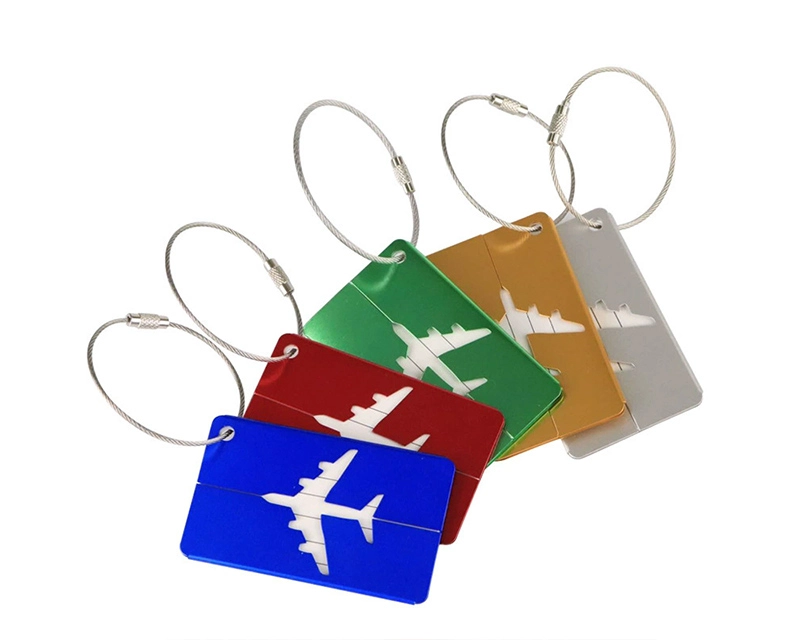
The JUSTOP luggage tag range gives buyers two verified material directions: several PU constructions and a compact aluminum model. The PU selection spans different card and cover formats, including a concealed pull-out information card, while the metal model uses an aluminum body and ring attachment. That assortment supports a practical rule: vary material only when it creates a distinct merchandising role or user benefit.
Write that role in one sentence before requesting prices. For example, a buyer might need a colorful privacy tag for family luggage or a compact metal identifier for business travel accessories. This prevents two similar SKUs from competing for the same shelf position and gives the supplier a clearer basis for sample development.
Compare PU Leather and Aluminum Luggage Tag Materials
Material affects form, but buyers should avoid treating it as a complete performance specification. PU can be cut, folded, stitched, and layered around an information card. Aluminum creates a rigid plate that may use a slot, frame, or separate card. The body material does not by itself confirm attachment strength, print life, scratch resistance, weather resistance, or privacy.
| Decision | PU leather direction | Aluminum direction | Buyer check |
|---|---|---|---|
| Product position | Soft, layered, fashion-led, or gift-oriented presentation | Compact metal presentation | Confirm how the item fits the intended retail range |
| Information layout | Can use a cover, window, or pull-out card | Often uses a compact slot or card area | Check readability and access on the finished sample |
| Attachment | Commonly paired with a strap and buckle | Can use a metal ring or cable-style connection | Test on the actual luggage-handle profiles |
| Artwork | Placement must account for seams, folds, and edges | Placement must account for holes, slots, and the plate area | Approve artwork at final size and position |
| Quality risk | Layer alignment, edge finishing, stitching, and buckle assembly | Plate edges, surface finish, information insert, and ring assembly | Define visual and functional acceptance criteria |
Set the comparison around observable properties instead of a material hierarchy. Record body thickness, mass, edge treatment, flexibility, card retention, attachment type, and the approved surface appearance for each candidate. Then test the finished tags through the handling routine relevant to the program.
If the buyer needs a performance statement, define that statement and its test before ordering. A supplier material name or one successful sample cannot establish how every production batch will behave.
Choose the Information Layout Before Decoration
A buyer must decide how quickly a finder can reach contact details and how much information remains visible during normal handling. An open window favors immediate access. A flap or pull-out card limits casual viewing but adds an action before the details can be read. The correct balance depends on whether the range emphasizes fast identification, privacy, or a combination of both.
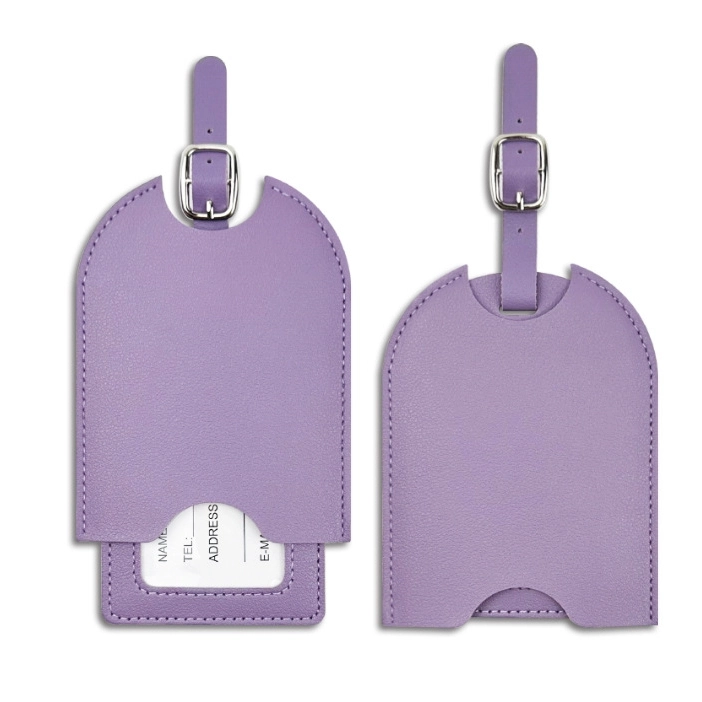
The PU leather privacy luggage tag uses a concealed pull-out information card. That construction is relevant when privacy is part of the product promise, but the sample still needs a usability check: the card should move as intended, remain with the tag, and leave the required contact fields legible. The separate luggage tag privacy and lost-bag recovery guide can support packaging or customer guidance about which details to display.
Evaluate the Attachment as Part of the Product
A strong tag body is of little value if the connection does not suit the luggage handle. Assess the attachment opening, adjustment method, hardware edges, and the path used to install or remove the tag. Test rigid and padded handles, narrow webbing handles, and any other profiles central to the target customer. Look for excessive movement, awkward installation, and contact points that could mark the handle.
For a buckle construction, the PU leather luggage tag with an adjustable metal buckle gives buyers a concrete reference. JTLT-007 takes a different route with its metal ring. Buyers can compare these attachments on the intended luggage rather than assuming that the PU or aluminum body determines security, handling, or ease of removal.
Approve Branding After the Construction Is Stable
Artwork should follow the physical design. On a PU tag, keep critical details away from stitch lines, folds, buckle holes, and moving covers. On an aluminum tag, work around the attachment opening and information slot.
Review the mark at finished size, because a logo that looks balanced in a design file may be crowded by hardware or unreadable after reduction.
Packaging needs the same discipline. State the product material accurately, show how the information card is accessed, and give instructions only for the supplied attachment. Avoid broad claims such as waterproof, scratchproof, unbreakable, or loss prevention unless the specific construction has documented test criteria that support the exact wording.
Use a Finished Sample and a Repeatable Quality Check
JUSTOP’s OEM service accepts existing drawings or samples for production. Its stated quality-control process covers incoming materials, production-stage inspection, and outgoing sampling.
Buyers still need product-specific acceptance criteria so those checkpoints address the approved tag, attachment, information card, artwork, and packaging rather than a generic visual review.
- Measure the finished body and information card, then confirm the agreed tolerance in the specification.
- Install and remove the tag on representative luggage handles; check buckle or ring movement and edge contact.
- Fill in the card with realistic handwriting or print and confirm that required fields remain readable.
- Cycle any cover or pull-out mechanism and inspect stitching, layers, slots, holes, and edge finishing.
- Compare artwork position, color, and legibility with the approved sample under normal viewing conditions.
- Confirm unit packing, set count, labels, and carton requirements before authorizing production.
Prepare an RFQ That Suppliers Can Quote Consistently
A useful RFQ identifies the target customer, material direction, finished dimensions, information layout, attachment, artwork, color reference, packaging, estimated quantity, target market, and requested timing.
Include a drawing or physical reference when the construction already exists. If dimensions or hardware remain open, ask for those decisions to be recorded before comparing quotations.
To review a PU or aluminum project, contact JUSTOP with the intended retail position, information-card format, attachment preference, artwork, quantity, and packing requirements. A complete brief helps both parties discuss the same finished product and identify any unresolved choices before sampling.
Conclusion Choose the Complete Construction
The best luggage tag materials are the ones that support a clear retail role and a verifiable finished construction. Choose PU when layered information access and a softer presentation suit the range. Choose aluminum when a compact metal format suits the product position. Then judge the card layout, attachment, artwork, and packaging together. A measured, filled-in, handle-tested sample gives buyers a stronger approval basis than a material name or catalogue image alone.
FAQ
Which Luggage Tag Material Is Best for a Retail Range?
There is no universal best material. PU works well for layered covers, stitched details, and pull-out cards. Aluminum works well for a compact metal format. Choose by customer, channel, information layout, attachment, and sample results rather than using material alone as a quality grade.
Are Aluminum Luggage Tags Better Than PU Leather Tags?
Not automatically. Aluminum changes the format and feel, while PU permits different layered constructions. Performance depends on the complete design, including edges, card retention, hardware, stitching, surface treatment, and attachment. Compare finished samples under the same handling checks before making a claim.
How Should a Luggage Tag Protect Contact Information?
Use an open window when immediate access matters, or a cover or pull-out card when limiting casual visibility matters more. In either case, make the necessary contact fields readable and keep the card securely connected to the tag. Test the action with actual users before approval.
What Should Buyers Test on a Luggage Tag Sample?
Check finished dimensions, information-card fit, legibility, cover movement, buckle or ring attachment, edge finishing, stitching or assembly, artwork, and packaging. Install the tag on representative luggage handles and record acceptance criteria against the approved sample before bulk production.

Our Products
Our Products


our testimonials
What They Say About Us

“Super patient throughout communication—efficient and professional. This collaboration was so hassle-free!”

“Both quality and service exceeded expectations. The details are on point—I’ll definitely recommend it to friends!”

“Delivered right on time, and the product matched every detail we discussed. Totally satisfied!”