
News
Contact UsCustom Travel Accessories in 2026 From Product Range Planning to OEM Sourcing
-
 author
- 24 September 2026

A strong travel accessories range starts with one clear customer need and a product mix that covers different parts of the trip. An organizer can lead the range, while a luggage tag, cosmetic bag, strap, or cover adds a separate function. The products do not need to look identical, but they should make sense together for the same customer and sales channel.
This matters even more with custom travel accessories. Before moving into branding, OEM, or packaging details, retailers and wholesalers need to decide which items belong in the range and which ones do not. That product logic is the foundation for the rest of the sourcing process.
Why Coordinated Travel Accessory Ranges Matter in 2026
Travel essentials are rarely used in isolation. A traveler packing for a business trip may need suitcase organization, luggage identification, and personal-care storage during the same journey. For buyers, this creates an opportunity to build a broader assortment without filling it with products that compete for the same purpose. The commercial value comes from how well the items work together for one customer group.
Build Around a Customer Need, Not a Product List
Start with the traveler and the trip.
A business-travel range may emphasize compact organization and easy luggage identification. A vacation-focused assortment may put more weight on packing and suitcase accessories. Beauty and lifestyle retailers can make cosmetic or toiletry organization the anchor.
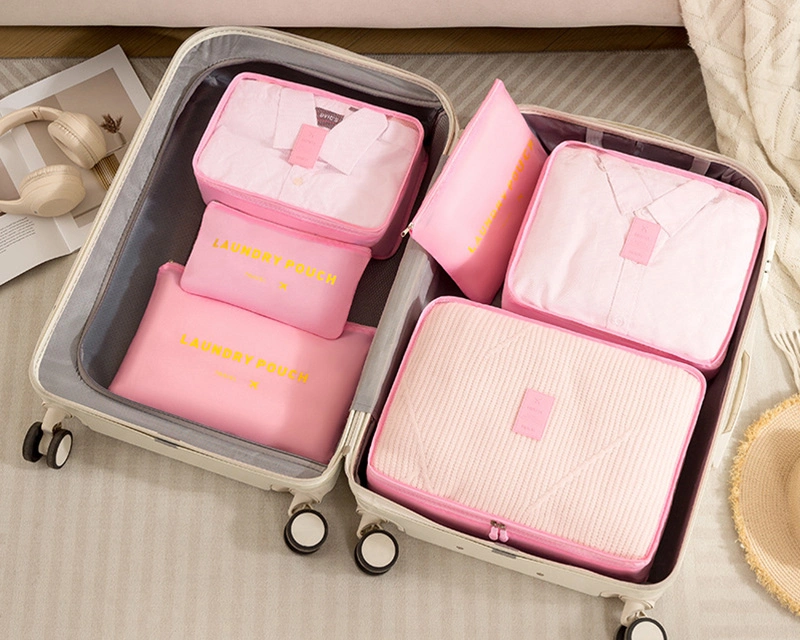
JUSTOP’s JTTBK026-6pcs travel organizer set is one example of an organization-led anchor product. Its six-piece format combines three clothing organizers with three additional pouches, giving a retailer a clear suitcase-organization starting point.
The next products should add another travel function rather than repeat the same one.
Which Travel Accessories Work Well Together in a Retail Range?
Once the anchor product is selected, the range can expand more deliberately. A coordinated assortment does not require every item to be sold as a set or share exactly the same construction. It simply needs a clear reason for the products to appear together. This is especially important for wholesale travel accessories, where too many similar SKUs can make both buying and merchandising more complicated.
Start With an Anchor Product
An organizer set, cosmetic bag, or travel bag can establish the main use case.
| Product role | Typical function | Range contribution |
| Anchor product | Organization or carrying | Defines the main customer need |
| Supporting accessory | Identification or fastening | Adds a different travel task |
| Add-on item | Protection or personal care | Extends the assortment |
The anchor should be easy for the customer to recognize. Supporting items can then create additional reasons to purchase without weakening that message.
Add Accessories With Complementary Functions
Luggage accessories such as tags, straps, and covers can extend an organization-led range because each addresses a different part of the travel journey.
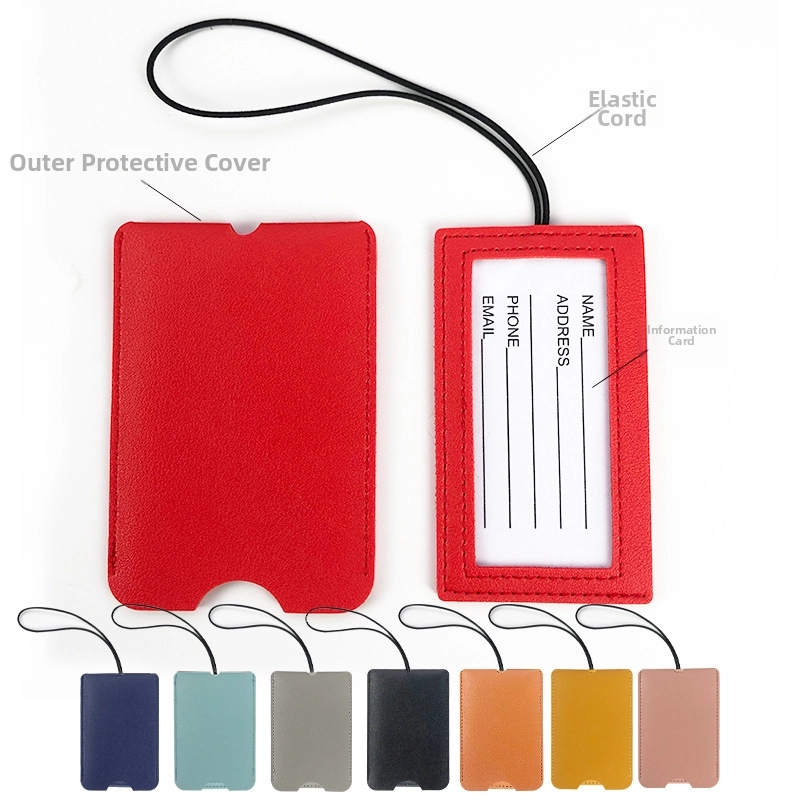
For example, the JUSTOP luggage tag range can add an identification component beside packing organizers without repeating the organizer’s role. A luggage strap or cover can provide another distinct product position within the same travel assortment.
A simple test helps: if two products need almost identical sales copy, the range may need another function rather than another SKU.
How to Build a Consistent Custom Travel Accessories Collection
Product roles should come before decoration. Once buyers know which items belong in the assortment, branding can connect them visually without forcing every product into the same format. This matters for custom travel accessories because organizers, tags, covers, and cosmetic bags have very different surfaces and uses. A coordinated range should feel related, not mechanically identical.
Coordinate Product Roles Before Branding
Decide what each item does, which customer it serves, and whether it is an anchor product or an add-on. Then create a shared visual direction.
That may involve related colors, consistent logo treatment, recurring print themes, or packaging that connects several SKUs. For private label travel accessories, a consistent brand language is usually more useful than adding decoration simply because space is available.
JUSTOP supports custom combo sets built around different sales scenarios and target audiences. This is relevant when a buyer wants several travel or storage products to work as one commercial offer rather than as unrelated items.
Once the products share a clear functional and visual direction, the next decision is where the range will actually be sold.
Match the Product Range to the Sales Channel
Channel affects more than packaging. It changes which products should lead the assortment, how many supporting items make sense, and how clearly each SKU must communicate its function. A luggage shop, an e-commerce seller, and a promotional-gift buyer can all source travel accessories, but they may need very different product mixes. Defining the channel early keeps assortment planning tied to real commercial use.
Retail and E-Commerce Assortments
Physical retail benefits from a simple category story. Online, the distinction between SKUs needs to be just as clear in a thumbnail and product title.
An organizer, luggage tag, toiletry bag, and strap should not all rely on the same generic message about convenience. Each item needs a specific job: organize, identify, carry, secure, or protect.
For retailers, that makes the range easier to merchandise. For e-commerce buyers, it also creates cleaner product positioning and stronger keyword separation across related pages.
Promotional and Travel-Gift Programs
A custom travel set can also work for corporate, tourism, or promotional programs when the products share a genuine use case.
An organizer combined with a smaller luggage accessory, for example, creates a more coherent travel story than a random group of branded items. Practical use should still lead the decision. A promotional item has more value when the recipient has a reason to keep using it after the event.
What B2B Buyers Should Evaluate in a Travel Accessories Supplier
After the product mix is defined, buyers can judge whether a travel accessories supplier is able to support the assortment as one project. A broad catalog alone is not enough. The useful question is whether different categories can be selected, customized, and presented in a way that suits the same customer and channel. This is where supplier capability begins to affect the commercial quality of the range.
Look for Multi-Category Sourcing Capability
JUSTOP works across travel organizers, cosmetic bags, luggage tags, luggage covers, and luggage straps. Those categories can fill different roles within one assortment instead of competing for the same use case.
The range should still stay selective. A business-travel collection may need organization and identification but not every available suitcase accessory. A beauty-led travel range may give more space to cosmetic storage and smaller organizers.
For wholesalers and importers, narrowing the assortment is often as important as expanding it.
Once the product mix and sourcing scope are clear, buyers can assess the manufacturing route needed to turn the range into a repeatable custom program.
How to Evaluate a Travel Accessories Manufacturer for Custom Programs
A travel accessories manufacturer becomes more important when assortment planning moves into development and production. At this stage, the buyer should already have a working idea of the target customer and product mix. The next question is how that idea should move into samples and bulk production without losing the purpose of individual SKUs.
Choose the Right Development Route
Existing styles can provide a practical starting point when the buyer does not need a completely new construction. OEM fits projects where a design, reference sample, artwork direction, or specification is already defined. ODM is more suitable when additional product development is needed before the final sample is confirmed.
JUSTOP provides OEM services for custom bag projects and also supports ODM development.
For OEM travel accessories, the initial brief should stay commercially focused: target customer, intended product mix, branding direction, expected quantity, and packing requirements. Those details give the manufacturer enough context to discuss a realistic development path.
The aim is repeatability. A coordinated range only works when each approved product can keep its own function while still fitting the broader collection.
Conclusion
A strong custom travel accessories range starts with the market, not the number of available products. Choose an anchor item, add accessories with complementary functions, and use branding to create consistency across the assortment.
For retailers, wholesalers, importers, and private-label brands, this approach also makes supplier and manufacturer discussions more focused. Each SKU has a clear commercial role, and customization decisions have a reason behind them.
Build the Range Around the Market
A coordinated collection does not need to contain every type of travel accessory. It needs the right products for the target customer and sales channel.
Buyers planning wholesale travel accessories, branded collections, or private-label programs can contact JUSTOP with the intended market, product mix, branding direction, expected quantity, and packing requirements to discuss a suitable starting point.
FAQ
Q1: What are the most useful travel accessories for a retail range?
A: The right mix depends on the customer and sales channel. Travel organizers, cosmetic or toiletry bags, luggage tags, straps, and covers can work together when each product solves a different travel task.
Q2: What is usually included in a travel accessory set?
A: There is no fixed formula. A travel accessory set may combine an organizer or pouch with smaller luggage accessories. The mix should reflect the target customer, intended use, and price position.
Q3: Can travel accessories be customized with the same logo and branding?
A: Yes. Branding can be coordinated through logo placement, color direction, print themes, and packaging while allowing each product to retain the format required for its function.
Q4: What should buyers look for in a travel accessories supplier?
A: Buyers should look at relevant product categories, customization options, sample support, packing capabilities, and whether the supplier can work with several products as one commercial range rather than isolated SKUs.
Q5: How do retailers source wholesale travel accessories from a manufacturer?
A: Start with the target customer, sales channel, product mix, branding direction, expected quantity, and packing needs. From there, buyers can decide whether existing styles, OEM, or ODM is the most suitable development route.

Our Products
Our Products


our testimonials
What They Say About Us

“Super patient throughout communication—efficient and professional. This collaboration was so hassle-free!”

“Both quality and service exceeded expectations. The details are on point—I’ll definitely recommend it to friends!”

“Delivered right on time, and the product matched every detail we discussed. Totally satisfied!”